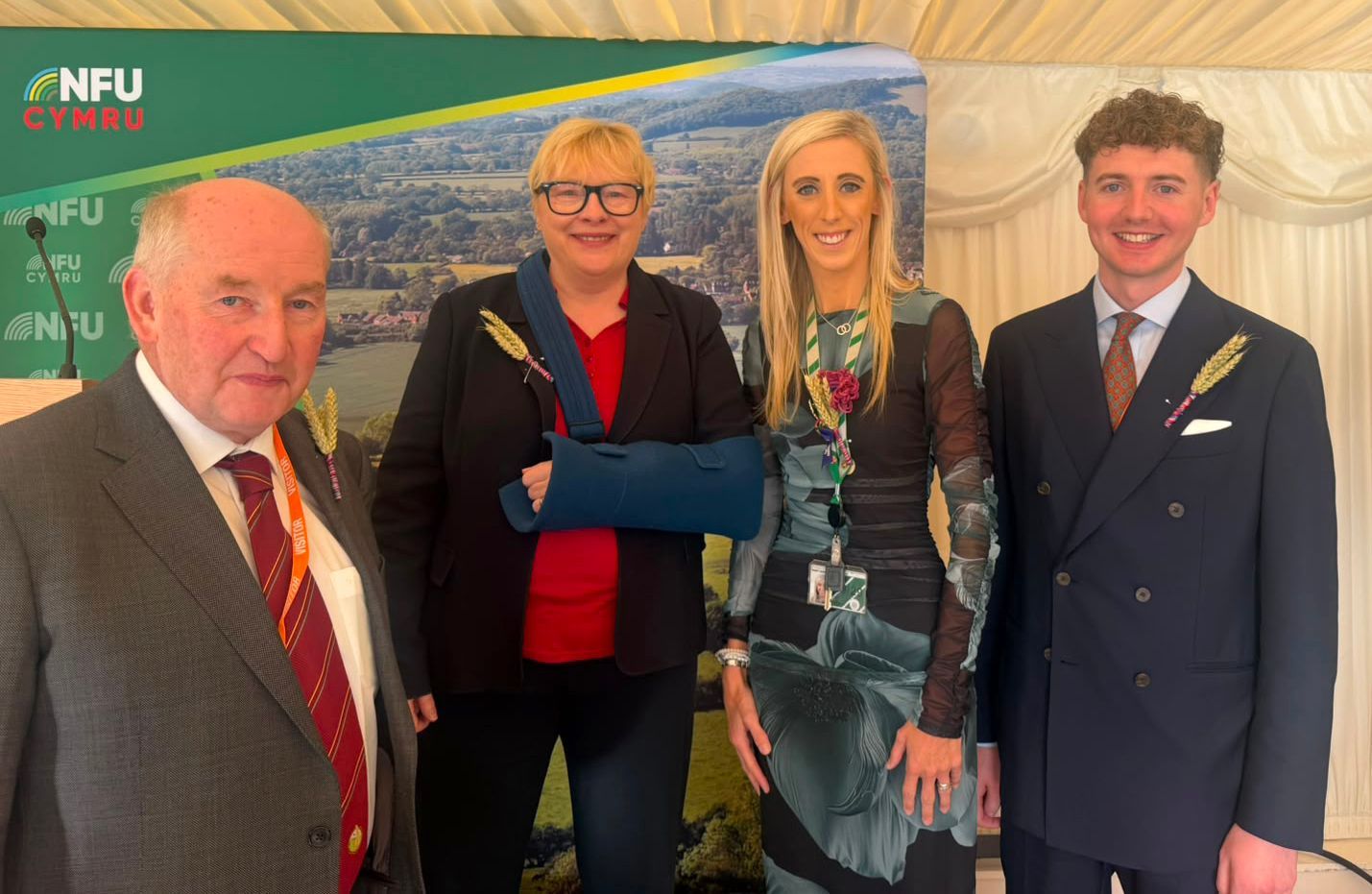
Delayed funding and post-Brexit barriers undermining native woodland in NI
Carla Lockhart MP has called for urgent clarity and action from the Stormont Executive over the future of forestry support schemes, warning that unnecessary delays and post-Brexit trading barriers are undermining efforts to expand native woodland planting across Northern Ireland.

The DUP Agriculture, Environment and Rural Affairs spokesperson, met recently with John Hetherington, managing director of Premier Woodlands, and has had previous discussions with a number of concerned garden centre owners, all of whom highlighted growing frustrations across the sector.
The MP explained: “Despite funding being available for woodland expansion and environmental initiatives, progress is being hampered by delays in decision-making, uncertainty around future grant support, and ongoing supply chain difficulties - particularly when it comes to sourcing native tree species such as oak.”
Mr Hetherington raised serious concerns regarding the potential ending of both the Forestry Expansion Scheme (FES) and the Small Woodland Grant Scheme (SWGS), and the lack of clarity from DAERA and Forest Service over what support mechanisms, if any, will replace them.
Carla Lockhart MP said: “Forestry businesses, landowners and environmental stakeholders need certainty, not confusion. There is money available to support woodland development, but Stormont must ensure these schemes are fit for purpose, properly funded and delivered without unnecessary delays.
“Private woodland development has a vital role to play in increasing tree planting rates across the country, but that can only happen if those working on the ground are fully supported.”
The MP also highlighted that grant rates for fencing and plantation establishment failed to keep pace with rising costs under previous schemes, despite assurances that full establishment costs would be covered.
She said: It is essential that any future schemes contain built-in flexibility to reflect inflationary pressures and rising operational costs throughout the lifetime of grant contracts.”
The Upper Bann MP also warned that ongoing problems surrounding the movement of plants and young trees from GB nurseries, is creating significant challenges for growers, contractors and garden centres.
“Suppliers in Northern Ireland prefer the GB market as a source of healthy, climate-suitable trees. While alternative EU sources are available, industry stakeholders have warned that some imported stock is less suited to local growing conditions, leaving trees more vulnerable to disease and environmental stress.
“The importation of trees from Great Britain to Northern Ireland continues to be a thorny issue because of the Windsor Framework,” Ms Lockhart said.
She continued: “It is deeply concerning that businesses are facing additional barriers when sourcing native species that are best suited to our climate.
“This has been ongoing issue. I alongside fellow cross-party MPs and Peers involved in the newly formed anti-protocol parliamentary group, intend to address this as a matter of priority.”
The MP fully endorses John Hetherington’s calls for faster and more efficient administration of future planting schemes to ensure landowners and contractors have access to a full planting season.
Ms Lockhart added: “Delays in issuing grant approvals have a knock-on effect across the entire supply chain, reducing the availability of suitable saplings and limiting the ability of contractors to complete planting work effectively and within a specified timeframe.
“It is vital that Stormont works constructively with the sector to remove these barriers and provide long-term confidence for woodland development in Northern Ireland.”
Carla Lockhart MP has welcomed news that scientists from the John Innes Centre in Norwich, have developed a pioneering method aimed at fast-tracking the breeding of disease resistance in ash trees.
The breakthrough offers renewed hope in the fight against ash dieback, a devastating disease that has caused widespread damage to ash populations across the United Kingdom and Northern Ireland.
The MP said: “This development represents an important step forward in protecting the countryside and preserving one of the most recognisable native tree species for future generations. Researchers are using advanced scientific techniques to identify and cultivate trees with stronger natural resistance to disease, helping to accelerate what would otherwise be a lengthy breeding process.”
Share